Home / Resume templates
Resume template gallery
Australian resume templates
Righto. Here are all 19 of our Australian resume templates, each shown with the same sample resume so you can compare the layouts side by side.
Pick the one that suits your job and build your own resume in it. Not sure how an Aussie resume is laid out? Read the Australian resume format guide first.
What makes a resume template suit Australia?
Every template here is made for Australian resumes, in plain text that hiring software can read. Fancy layouts are like a verandah crammed with gumboots. You can't find the pair you need, and neither can the software.
Applicant tracking systems (ATS) are the software many employers use to sort applications. Some of them misread tables and columns, so our free ATS check flags those and scores your resume out of 100. You don't need an account for the check. Inside the builder, your resume gets the same score as you work on it.
Packs start at A$15, paid once, and nothing renews. Everything on this page is for looking at, so have a squiz at them all.
Start here
Not sure which one to pick? These two cover most jobs.
-
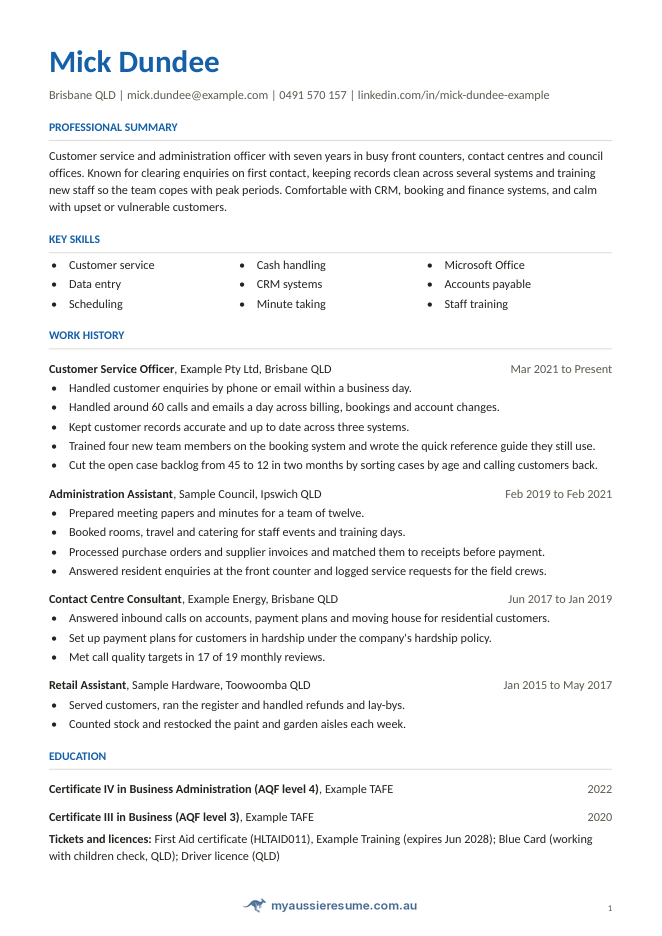
Keystone
The safe choice for most roles, so a good first pick if you're unsure.
A bold name, headings in capitals in your colour and a fine grey rule under each. The safe choice for most roles.
-
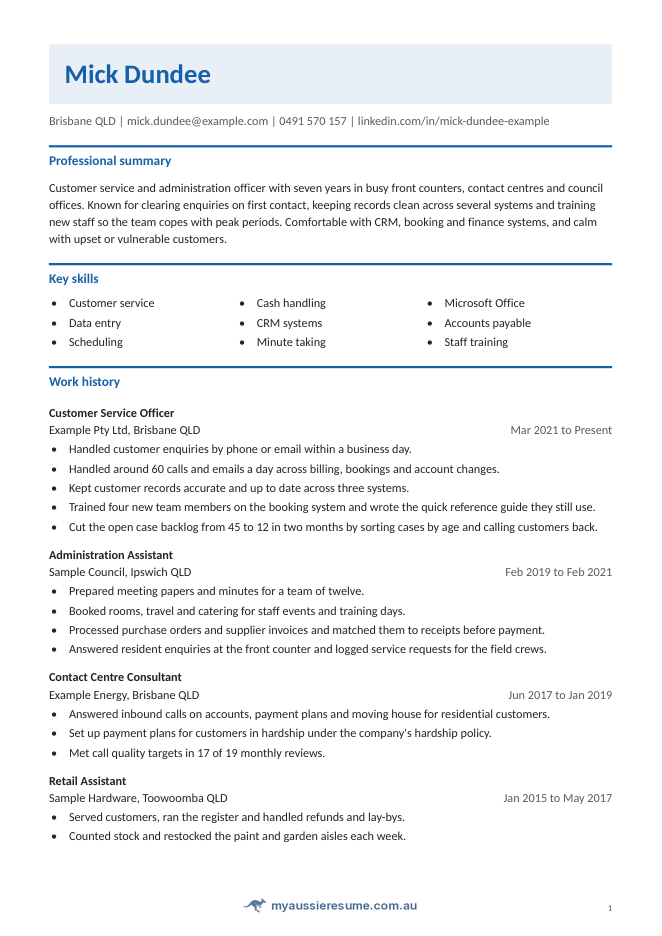
Charter
Sober and structured, made for government and public sector applications.
Sober and structured for government jobs: your name in a pale panel, firm section lines, each role on two lines with its dates, and skill groups set out clearly.
Simple resume templates
Clean, plain layouts that suit most roles, from trades and retail to the office.
-
Keystone
Suits most roles, from trades and frontline work to the office.
A bold name, headings in capitals in your colour and a fine grey rule under each. The safe choice for most roles.
-
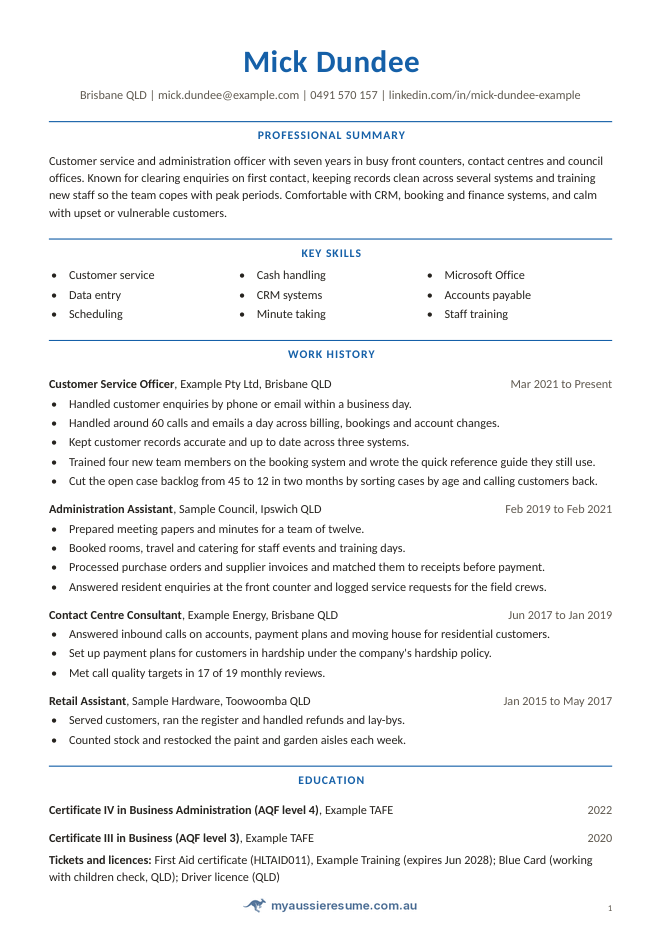
Meridian
Suits roles where a balanced, tidy first impression matters.
A centred name in your colour, and centred headings in spaced capitals under a line in the same colour.
-
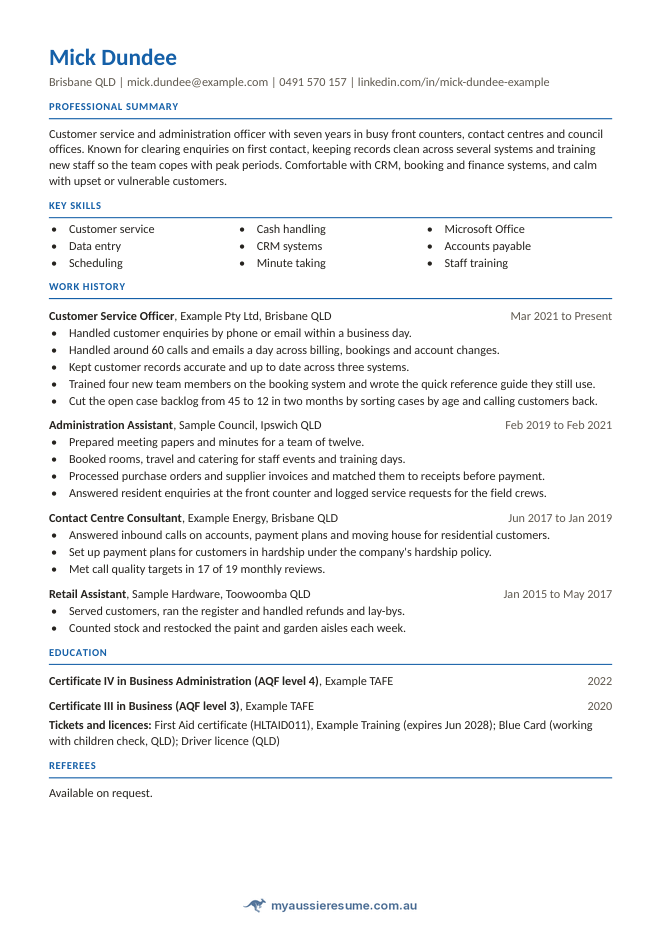
Brief
Suits long histories of site, trade or shift work that must fit on fewer pages.
Smaller type, tighter spacing and slim headings over a thin line in your colour. Fits a long work history on fewer pages.
-
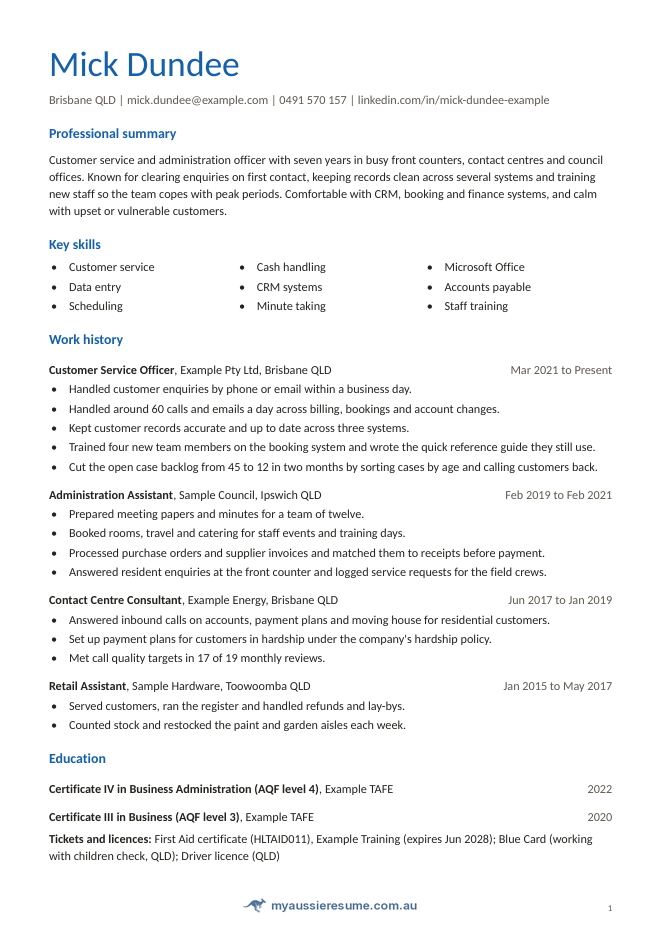
Trueline
Suits a quiet layout, including school leavers and people returning to work.
No rules and no capitals: a large, light name in your colour and bold headings in plain sentence case. The quietest page.
-
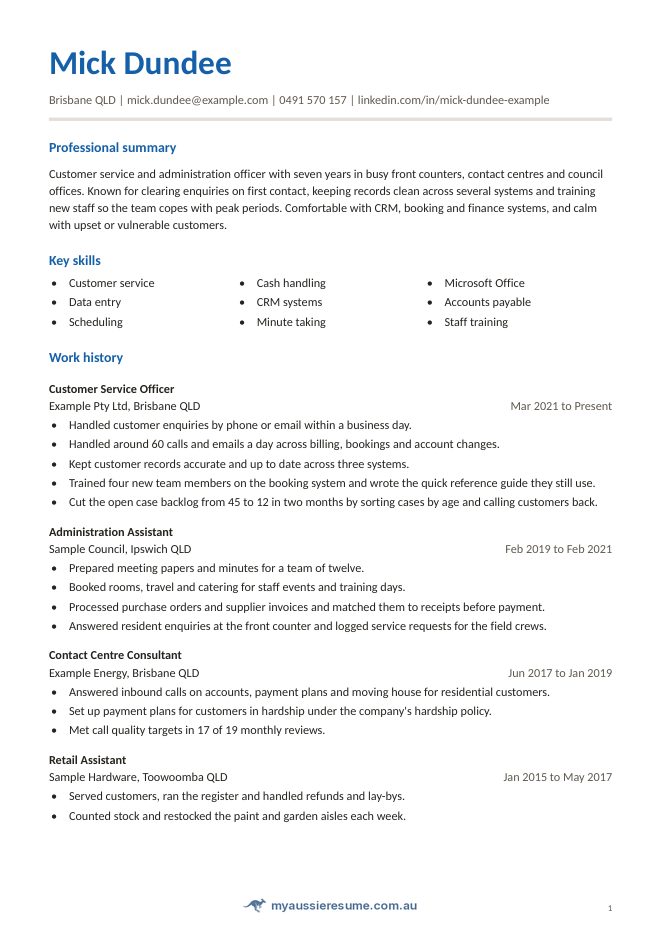
Clearline
Suits supervisors, team leaders, administration and site operations.
A bold name over a soft grey line, then roomy headings in sentence case in your colour. Each role has its title and dates on the first line and the employer beneath.
-
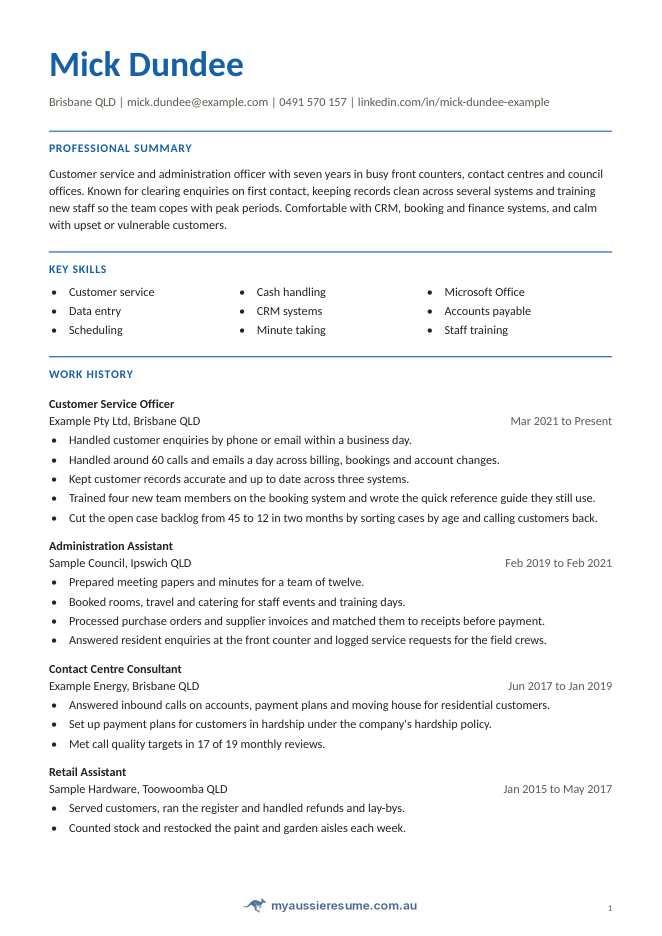
Divide
Suits school leavers, apprentices and early-career applicants.
A large bold name and a firm line in your colour above every section. Each role shows its title and dates on one line and the employer beneath.
-
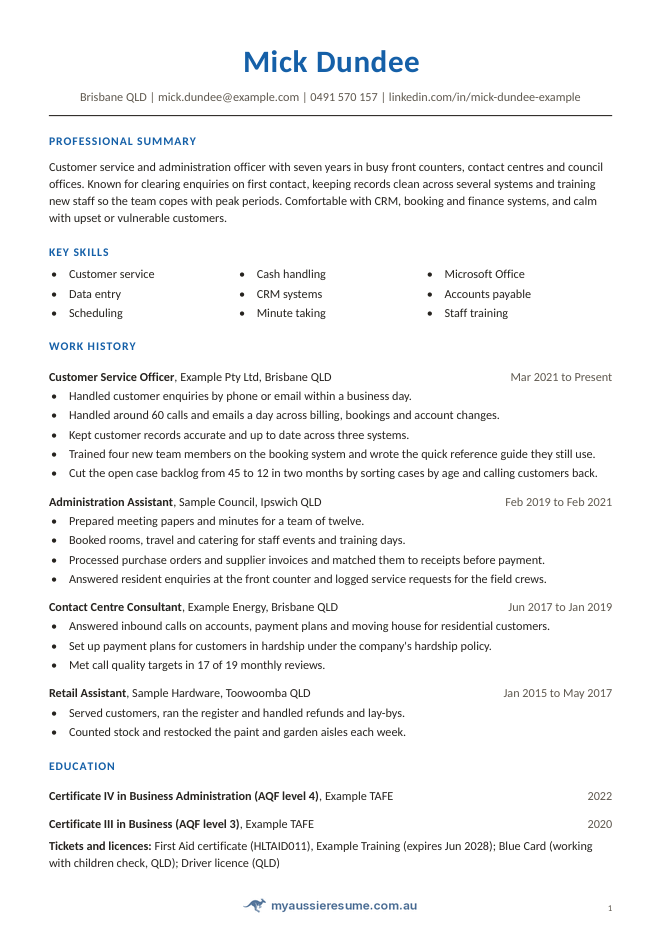
Lintel
Suits most roles, from trades and technical work to administration.
A centred bold name and job title, your details on one line with a full-width line beneath, then spaced bold headings in your colour set to the left.
-
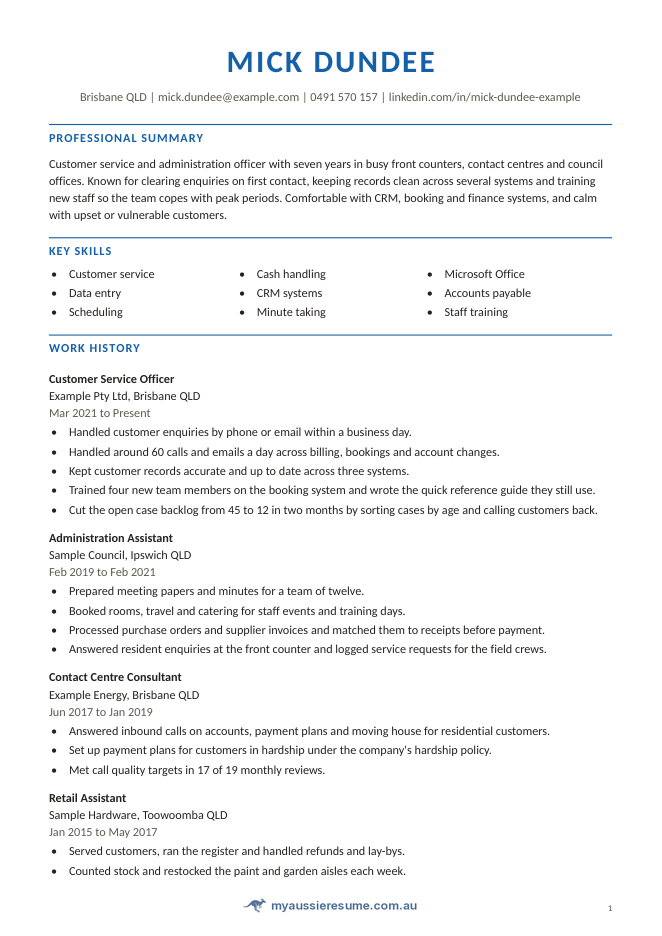
Marker
Suits accounting, finance, administration and professional roles.
A centred, spaced bold name with your details on one line. A fine line in your colour opens every section, and each role stacks title, employer and dates.
-
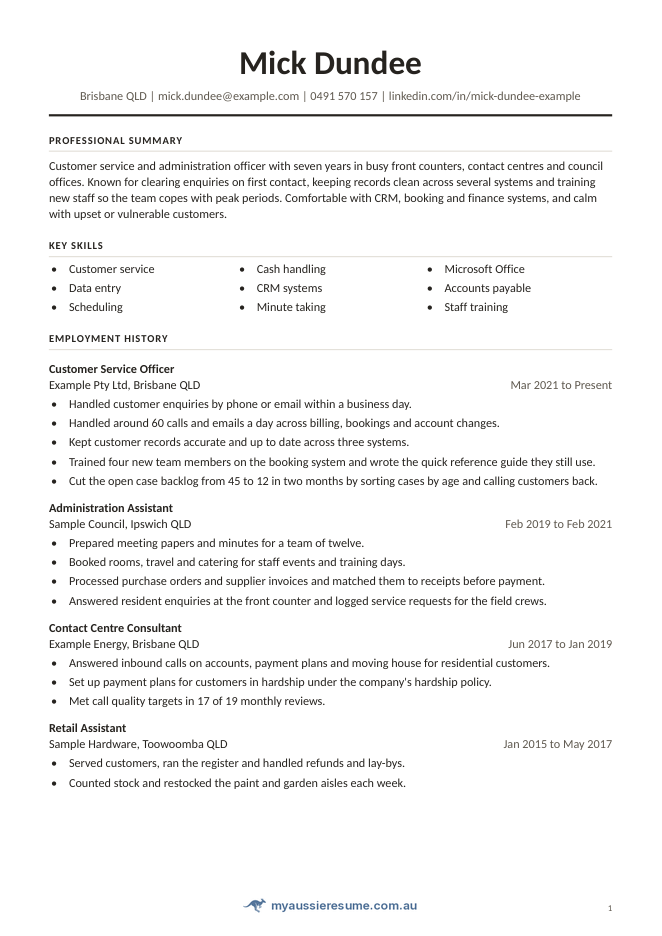
Tandem
Suits ex-ADF applicants and people returning to work, skills first.
A centred name over a firm rule, then Key skills in two bulleted columns straight after your summary. Fine ruled headings, and each role has its title and the employer beneath.
-
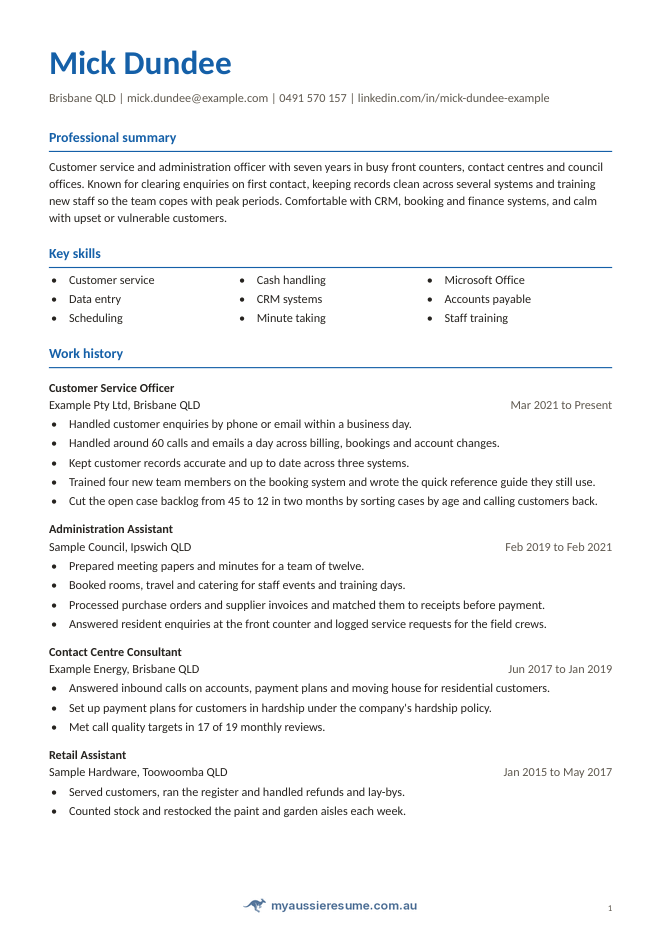
Dubbo
Suits retail, hospitality, mining, trade and general operations roles.
A bold name over clean sentence-case headings, each over a full-width rule in your colour. Each role has a bold title, then the employer with the dates at the right.
Traditional resume templates
Serif and ruled layouts for formal workplaces: law, finance, government, academia and senior roles.
-
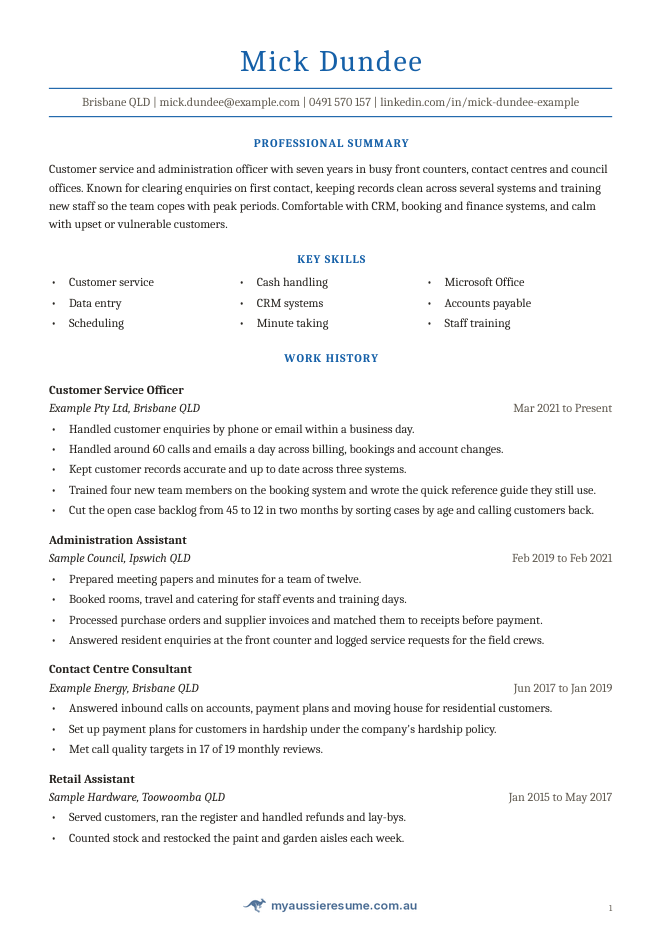
Chancery
Suits law, finance, academic and other formal roles.
A centred serif page: a spaced name, your details between two fine lines and centred headings. For law, finance and academic roles.
-
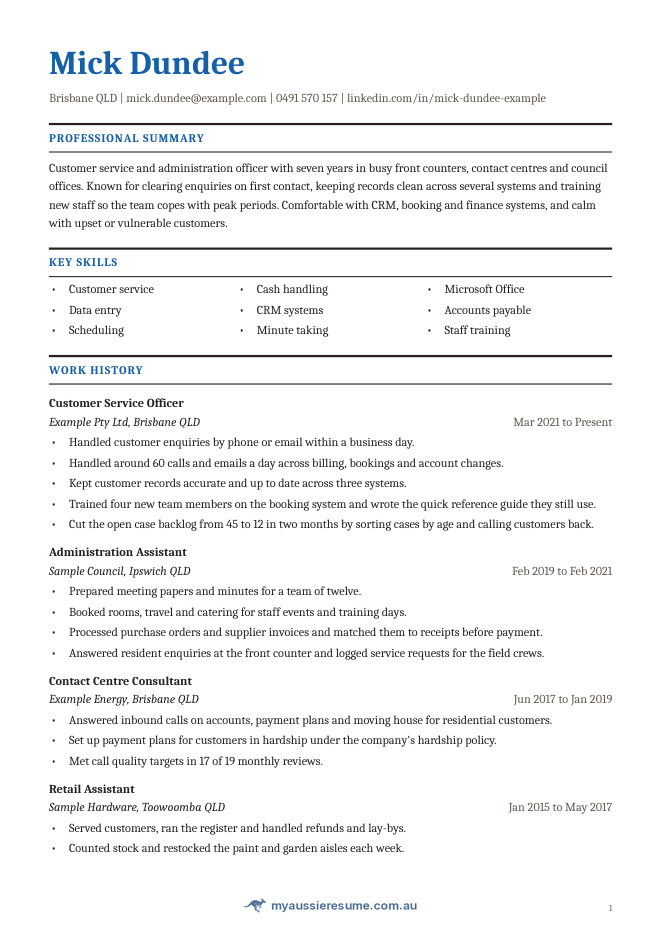
Parallel
Suits traditional workplaces that value an ordered look.
A left-aligned serif page with each heading set between a heavy line and a fine one. Traditional and ordered.
-
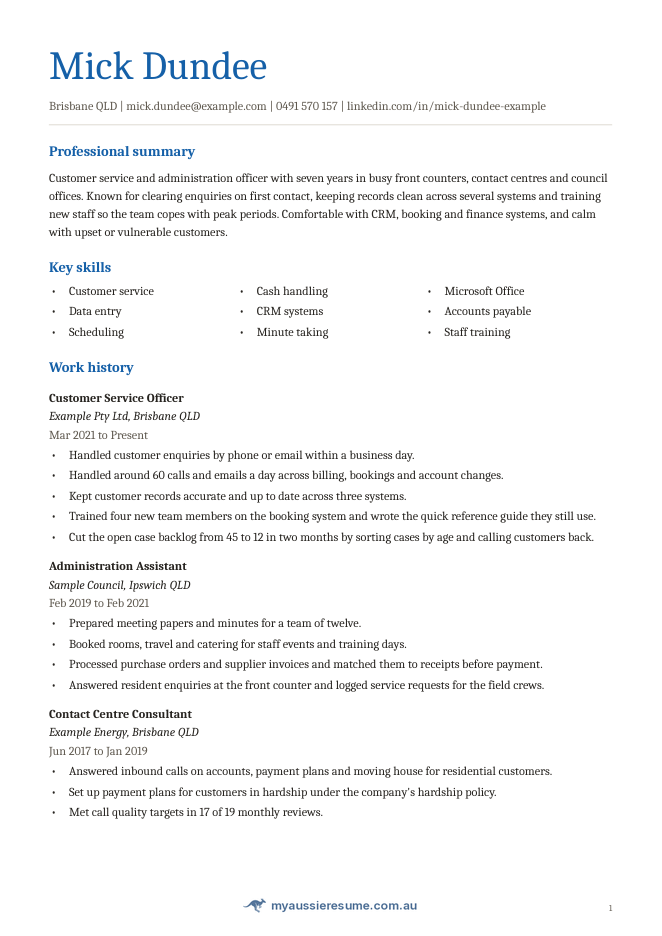
Masthead
Suits communications, creative and senior roles.
A large serif name, headings in your colour in sentence case and each role set out line by line, like a magazine page.
-
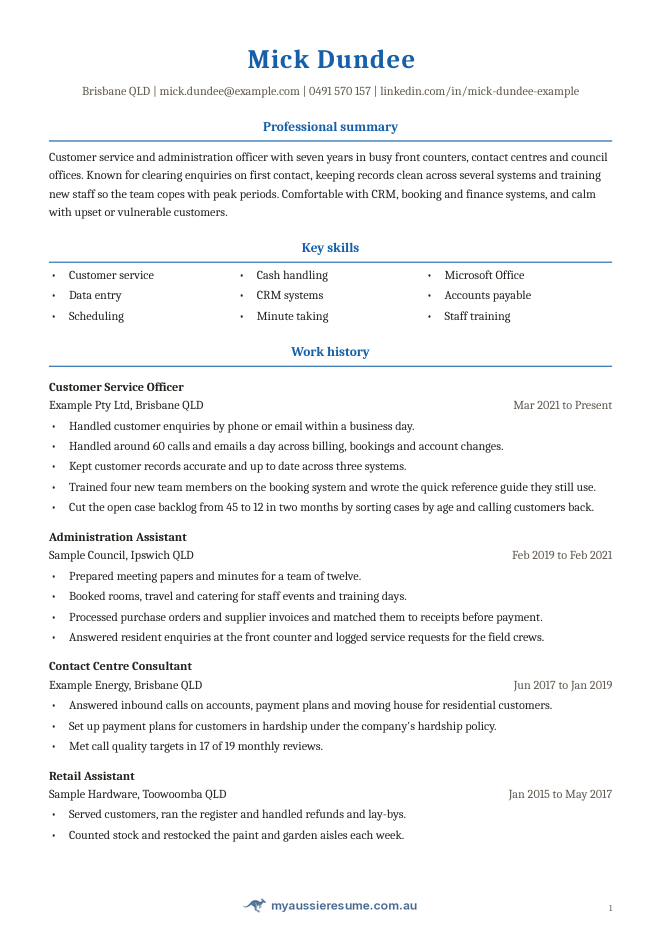
Quill
Suits finance, consulting, legal and academic applications.
A centred serif page with a refined name, centred headings each over a full-width line in your colour, and roles on two lines with dates at the right.
-
Charter
Suits government and public sector applications.
Sober and structured for government jobs: your name in a pale panel, firm section lines, each role on two lines with its dates, and skill groups set out clearly.
-
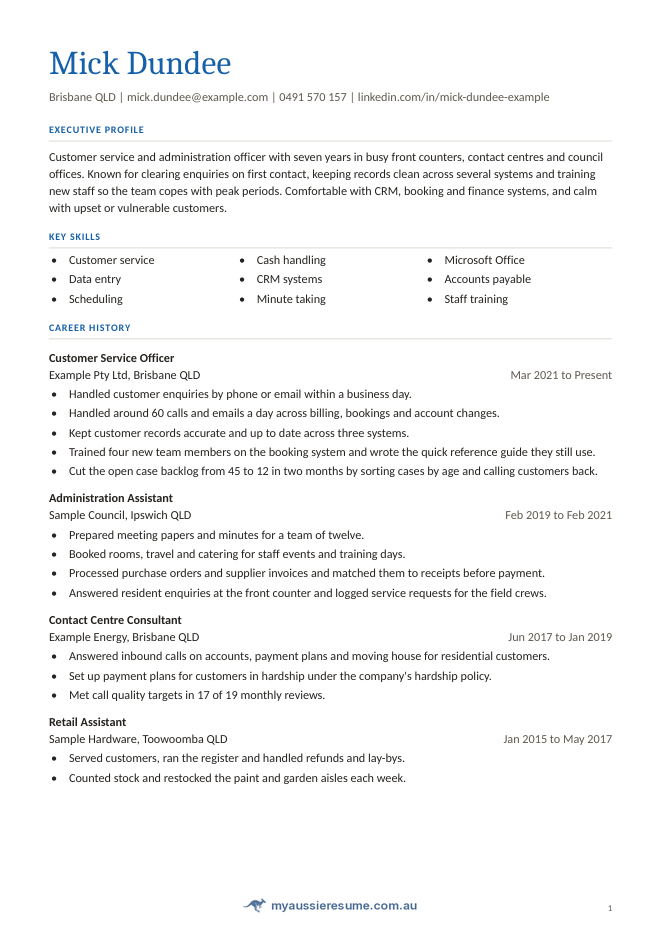
Geelong
Suits senior, management and executive roles.
A large serif name in your colour, with your title and details in grey. Small spaced capital headings sit over a fine rule. Each role has its title first, then the employer and dates.
-
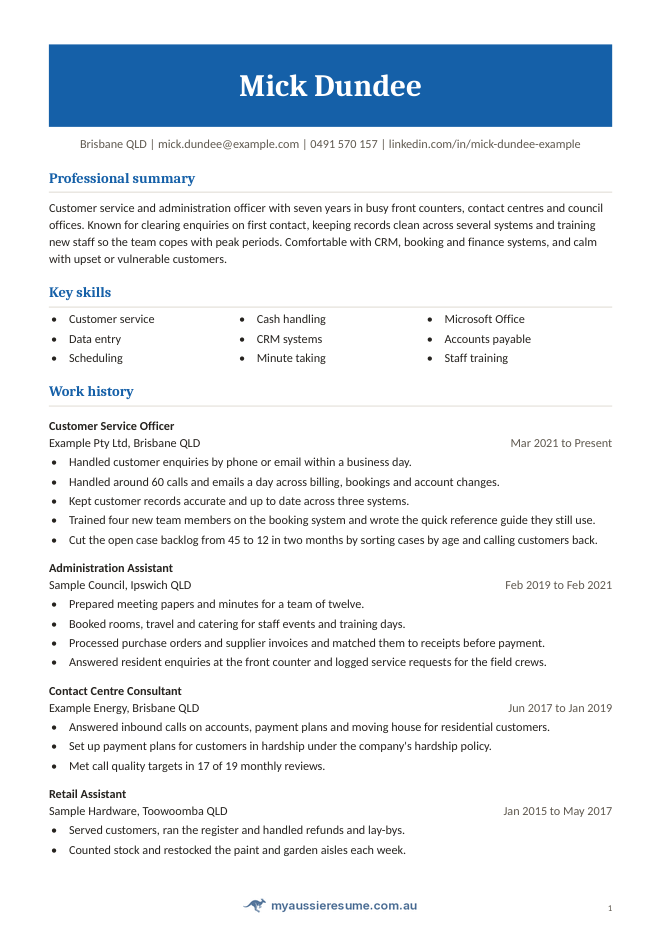
Mackay
Suits corporate, education and professional services roles.
A full-width band in your colour holds a centred serif name and your title in white, with your details in grey below. Sentence-case serif headings in your colour stand over a fine grey rule.
-
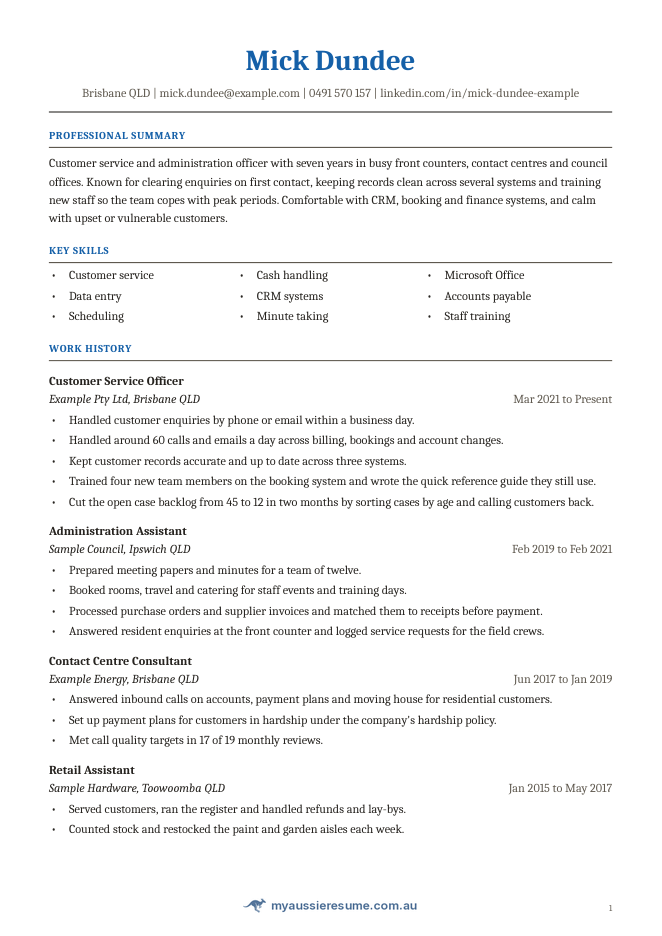
Albury
Suits law, finance, policy and graduate roles.
A centred serif header with your name in your colour over a firm line. Small capital headings sit left over a full rule. Each role has a bold title, then the employer in italics and the dates.
-
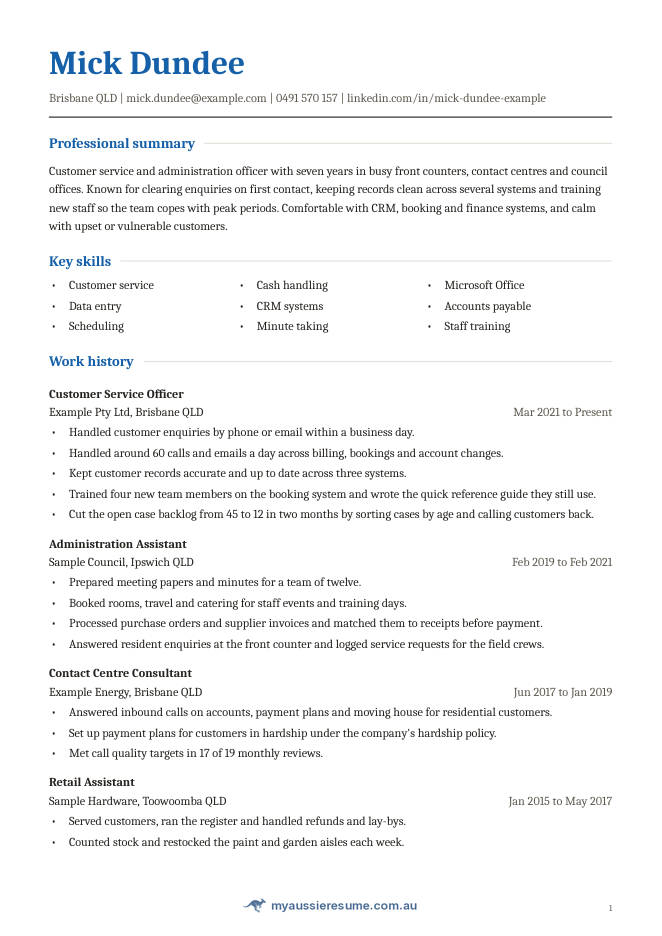
Mildura
Suits academic, research, teaching and health roles.
A serif name and title, then sentence-case serif headings in your colour that run into a fine rule. Built for research, teaching and publication-led careers.
Found one you like?
Paste the job ad into the builder and it tailors your resume to the job.